Simchat Torah
Simchat Torah · Rejoicing of the Torah
The joyous completion of the Torah reading cycle and its immediate new beginning.
Tip: hover (or tap) any underlined word for a quick definition.
Lesson video · Simchat Torah
Beth Din priority
Simchat Torah
- When
- September–October; 23 Tishrei in traditional observance, the next day after . In Israel it is celebrated on 22 Tishrei with Shemini Atzeret. The diaspora “ninth day” label describes the sequence, not a ninth day of Sukkot.
- Why
- Celebrate completing and restarting the annual reading of the Torah, the Five Books of Moses.
- How and what it means
- Read the end of Deuteronomy and begin Genesis again, connecting the end of the Torah to a new beginning.
- Dance with the Torah scrolls in seven circuits, called .
The basics
Name, translation, date and length — the facts to have by heart.
Name and timing
- Hebrew name
- Simchat Torah
- English translation
- Rejoicing of the Torah
- Time of year
- Fall (September–October), at the end of Sukkot
- Date / timing
- Immediately after Shemini Atzeret
- Length
- 1 day
- Historical reason
- Marks the completion and renewal of the annual Torah reading cycle.
Meaning and story
Why this exists, what happened, and the values it carries.
The story, told as a story
Read this first — it connects the symbols, rituals and words below.
Simchat Torah is the story of a book that never ends. Each year we read the Torah from beginning to end in a weekly cycle. On this day we read the final verses of Deuteronomy and, without pause, begin again with the opening of B'reishit (Genesis). The Torah is finished and a new start is made in the same breath.
So we celebrate: we dance with the Torah scrolls seven times around the synagogue — seven, a full week, the same seven as the bride's circles at a wedding. There are two Torah holidays: Simchat Torah celebrates reading the Torah, and Shavuot celebrates being given the Torah.
What it means
- Simchat Torah means the Joy or Rejoicing of the Torah.
- We finish the annual Torah reading and immediately begin Genesis again.
Story and history: key points
- The final verses of Deuteronomy are read and the opening of B'reishit follows at once.
Major themes and values
- Joy in Torah
- Continuous, never-ending learning
- Community celebration
Practice
Rituals, symbols, prayers and foods — and the reason behind each.
Rituals and observances
- Reading the last chapters of the Torah and then immediately starting all over again with the first chapter.
- — circling around the synagogue seven times with the scrolls, the same seven circuits as a bride around the groom.
- Dancing with the Torah scrolls, and a big festive meal.
- Honoring the (the one who completes the Torah) and the B'reishit (the one who begins it again).
Why we do these rituals
- Beginning Genesis the moment Deuteronomy ends teaches that Torah learning never finishes.
- Dancing with the scroll expresses joy in Torah with the whole body, not only the mind.
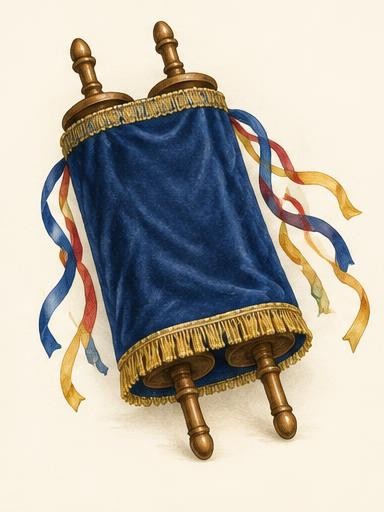
Symbols and what they mean
- Hakafot
- Seven circuits with the Torah; joy carried around the community.
- Chatan Torah / Chatan B'reishit
- Ending and beginning honored together — Torah study is continuous.
Important prayers and readings
- Torah reading of the end of Deuteronomy and the beginning of Genesis
Foods
- Festive meals and celebration
Words to know
The Hebrew vocabulary for this topic.
Vocabulary
- Hakafot
- The seven circuits with the Torah scrolls.
- Chatan Torah
- The honoree who completes the Torah reading.
- Chatan B'reishit
- The honoree who begins Genesis again.
Beth Din prep
Answer these out loud before you sit down with the rabbis.
What I should be able to explain to the Beth Din
1Why we begin Genesis immediately after finishing Deuteronomy.
Answer:The Torah is an endless cycle of learning: as soon as we finish we start again, showing that study never ends and the Torah is always new.2What are and how many circuits there are.
Answer: are joyful circuits around the synagogue, dancing with the Torah scrolls. There are seven of them.
Key points to be ready to explain
The core ideas of this topic in brief — the things to be able to say in your own words.
- When
- Fall (September–October), at the end of Sukkot. Immediately after · Length: 1 day
- Why
Marks the completion and renewal of the annual Torah reading cycle.
Simchat Torah means the Joy or Rejoicing of the Torah.
We finish the annual Torah reading and immediately begin Genesis again.
- How
- Reading the last chapters of the Torah and then immediately starting all over again with the first chapter.
- — circling around the synagogue seven times with the scrolls, the same seven circuits as a bride around the groom.
- Dancing with the Torah scrolls, and a big festive meal.
- Honoring the (the one who completes the Torah) and the B'reishit (the one who begins it again).
Key symbols: Hakafot · Chatan Torah / Chatan B'reishit
- It comes at the end of Sukkot. The last chapter of Deuteronomy is read and the first chapter of Genesis begins again, celebrating that the whole Torah has been read, and a fresh start.
- Congregations dance with the Torah scrolls seven times around the synagogue. Seven recalls a full week, and the same number appears in the bride's at a wedding.
- Two holidays honor the Torah: Simchat Torah celebrates reading it; Shavuot celebrates receiving it.